Features Editor Ishaan Rahman argues cancel culture is a reasonable method of holding people to account in a free and democratic society.
‘Cancel culture’ has been the subject of controversy over the last year as high-profile celebrities, politicians and writers found themselves being reprimanded for undesirable behaviour. Many books, movies and television shows, were also take out of circulation due to their content. This phenomenon has been met with an equal backlash with many arguing that it infringes on free speech and creates an intolerant environment.
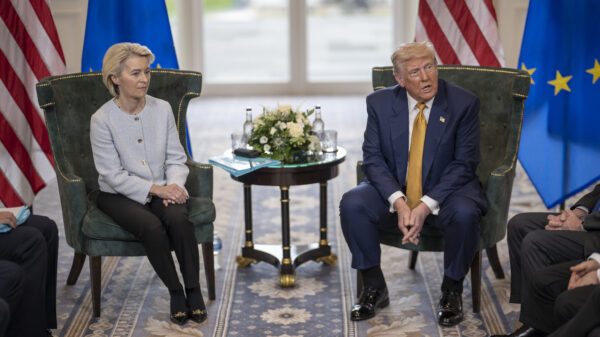
The Conservative Political Action Conference (CPAC) in February ran under the headline “America uncanceled”. By the way, this was slightly ironic given that, in his speech, former President Donald Trump said to “get rid of” Republicans who voted for his impeachment, which sounds a lot like cancelling. Though opposition to cancel culture is not isolated to the political right, former US President Barack Obama also criticised young people who he accuses of mistaking activism for being “as judgemental as possible”.
To be clear, Obama is not wrong. There are certainly examples of remarks being taken out of context or blown out of proportion. The Farenheit 451-eque purge of older movies and TV shows that were deemed to be insensitive, such as Gone with the Wind and Little Britain, after the summer Black Lives Matter protests is also an example of unhinged cancel culture. It is also clear that meaningful change cannot, alone, be achieved by simply expressing outrage and alienating anyone who does not agree with you.
However, it is important to separate outrageous examples of cancel culture from the underlying principle. The reality is that people should be held accountable for what they say. If individuals engage in behaviour that is broadly reprehensible then they should be denied the privilege of appearing on national television, giving speeches at prestigious institutions, being paid to act in movies and TV shows and spreading their deplorable beliefs on social media.
This idea is neither “woke” nor pernicious, “communist” censorship, it is common sense. No one is suggesting that the government be involved in holding people to account, so this is not a violation of free speech. In fact, even the most ardent defenders of free speech, including the 19th century philosopher John Stuart Mill, acknowledged people’s right to shun or ostracise distasteful people from society.
Furthermore, expressing outrage is a key method of forcing change in a capitalist, not communist, society. Social media companies, movie studios and other corporations feel obligated to hold their users and employees to account because they fear consumer backlash that will cost them profit. So cancel culture is actually a natural product of living in a free-market, capitalist society. Hence, right-wing, free market conservatives have brought this cancel culture reality on themselves.
Obviously, there have to be limits on cancel culture, which begs the question: what behaviour is reprehensible enough that it deserves “cancelation”? Well, polite debate is clearly not cancel-worthy. People who disagree can have civil arguments over whether to raise or lower taxes, increase or decrease immigration, how to tackle climate change, Israeli-Palestinian issues and the extent (or existence, at all) of systemic racism. One may disagree with a tax-cutting, anti-immigrant conservative who believes systemic racism is nonexistent though, if they express their views politely and without malice then they should be allowed to use platforms to spread their ideas.
But there is some behaviour that is cancel worthy and we can look at through the lens of recent events. Actress Gina Carano’s idiotic comparison of conservatives being suspended on Twitter to Jews facing genocide at the hands of the Nazis among other comments is definitely cancel-worthy. Disney should not be paying someone with Carano’s character to act in their television shows and their fans made that abundantly clear to them. Again, to be clear, expressing one’s views is an undeniable right but being paid tens of thousands of dollars, as Carano was, to act in a television show is a privilege that can be taken away as quickly as it was granted.
Another obvious example is former US President Donald Trump’s permanent ban on Twitter. Â The social media giant cited Trump’s role in the January 6th storming the US Capitol as the primary reason for his ban. Though his continued insistence that the election was stolen from him is inarguably false and damaging to American, and frankly global, democracy. Even without the violent insurrection, Twitter was right to ban Trump and he does not have a right to a platform from which he can spread his anti-democratic, traitorous, terrorist-sympathising bile. Far-right extremists should have the same fate as Islamists when it comes to social media.
To be clear, accountability is not and should not be isolated to the political right. The UK Labour Party has a serious problem with anti-semitism that its former Leader, Jeremy Corbyn, utterly failed to take adequate action on. On the surface, it seems that the new leader, Sir Keir Starmer, is taking stronger action on this issue, which should be commended. He rightly sacked Rebecca Long Bailey from the Shadow Cabinet after suggesting that Israelis were somehow responsible for George Floyd’s death.
Cancel culture is a complicated business and there will inevitably be disagreements on what is cancel-worthy. However, the central idea is virtuous and fully compatible, if not wholly necessary, in a free, democratic society. It follows a simple premise that most are taught in pre-school: words and actions have consequences.
About the author