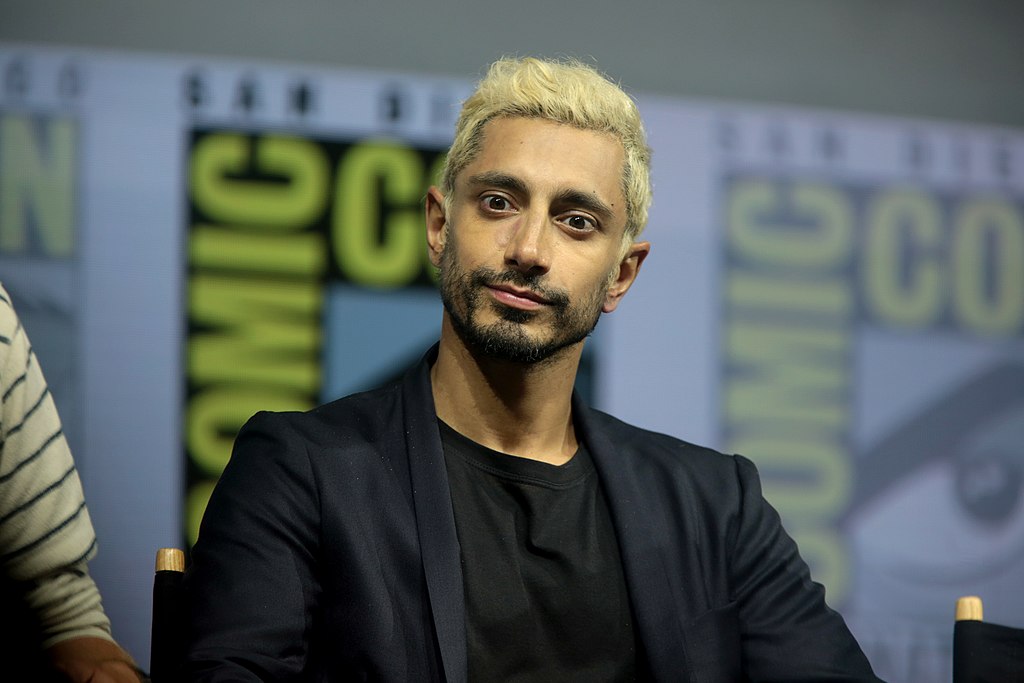
Roar writer Anoushka Chakrapani reviews Riz Ahmed’s 2020 album The Long Goodbye.
“They ever ask you, ‘Where you from?’, Like, ‘Where you really from?'”
This is not Riz MC or the Swet Shop Boys, this is Riz Ahmed. The rapper, actor and activist pens a powerful wake-up call for the post-Brexit UK, for what it means to be brown in Britain, for what it means to be British. In this conceptual album, accompanied by a short film, he unravels trauma, both inherited and lived-in, that breaks down the abusive relationship with Britain over centuries.
This fifteen-track masterpiece reels you in with “The Breakup (Shikwa).” It gives you a glimpse of inter-generational trauma and schools you about colonialism in a way the UK education system never could. The spoken word track rapped to alap needs to be played multiple times for you to grasp each and every nuance. Britain is Britney, a woman who represents colonialism, and this is Riz Ahmed’s break-up with her. He details exploitation, may it be economic or physical; starting with the East India Company, ending up at present-day Kashmir. He covers it all with biting lyrics that stick with you for days. This one about partition has been on my mind in particular: “Carved a scar down my middle just to leave me stretched out / I survived her attempt to dead man but the bleeding never ends, man.” Ahmed has managed to pack years worth of struggle, violence and oppression in this one track, spelling out the complicated identities of first and second-generation immigrants (“A future of mixed cultures, but I was so f***ng stupid / Didn’t stop to think how badly it would just confuse them”).Â
“Othered” by his own home, he explores the dangers of the rising far-right and xenophobia in the powerful short film directed by Aneil Karia (“Britannia’s trying to throw me out, Brittney, baby, please stop”). The hasty manjira beat in “Fast Lava” builds urgency and makes you swell with panic when layered on top of distressing handheld-camera visuals. Let me just say one thing without spoiling the video for you – it’s not far from reality. Pogroms and lynchings against Muslims in India, as well as Islamophobia more apparent than ever with Trump as President – it’s a state of constant fear of the “when.†There is disbelief in his voice when he raps this track (“Who gave you jewelry? Gave you real food to eat”), disbelief in having to break down what Britain truly is, if not the BAME individuals who built this country from the ground up. The Koh-i-Noor is a recurring motif in his work, symbolic not just for the looting but also the culture that is a part of the UK. The diamond is still locked up in the Tower of London, along with other stolen cultures placed in glass containers for us to applaud at the British Museum.Â
“Toba Tek Singh” navigates writer Saadat Hasan Manto’s story of the same name, questioning belongingness post-partition. Riz Ahmed is left in a “no man’s land” like Bishan Singh in the short story. Singh witnesses his country divided and is unreasonably forced to “go back home,” which resonates not just with post-Brexit UK but also the Black Lives Matter movement. The displacement of 20 million people after the split of India and Pakistan, the largest mass migration in human history, flows across the decades he covers. After all, history is not a single line; it’s a complicated web.
He combines academia with music that removes the formal suit and tie coldness it brings with it. Drawing on Salman Rushdie and his own performance in Rogue One: A Star Wars Story, Ahmed is no stranger to using dark humour to foreground the problematic government policies as seen in “The Hamilton Mixtape: Immigrants (We Get The Job Done).”
He has never shied away from the political. It is inherently a part of us, and he gets that. It’s our privilege that allows us to ignore it. His songs document real experiences of British South Asian communities whose Britishness has been questioned, during the Bush administration (“Post 9/11 Blues”) or post-Brexit (“Where You From”). He is making history as he writes about it. In his own words: Riz Ahmed is Future meets Fanon.