
Staff Writer Lubi Sakalieva reviews the final season of the hit Netflix Original, Stranger Things.
Throughout the years Netflix has produced many original series. From critically low shows like The Witcher: Blood Origin, to award-winning audience favourites like Stranger Things.
The Duffer Brothers’ cinematic combination of Stephen King and Steven Spielberg was culturally trailblazing in making Stranger Things. Set in the 1980s, Stranger Things follows a group of kids in their home town, Hawkins. Full of conspiracies, nostalgia and experimentation, the series unfolds to reveal the politics, mystery and culture of the town in Indiana with a coming-of-age tale of paranormal activity.
For the last 5 years, horror has proven to be the fastest-growing film genre, setting multiple records for viewership and market interest. Almost as if they could see into the future, the Duffer Brothers knew exactly what audiences would want. The show is an intriguing and carefully curated combination from early years nostalgia, fantasy and horror. The immersive world-building, complex characters and the spectacular visual effects further secured the series’ respectable reputation.
Talking about reputation, every show has its own aesthetic, and it’s crucial to know how to patent it. Want to live that scandalous Upper East Side rich girl fantasy? Gossip Girl. Perhaps you would prefer to keep it lowkey and stick to small-town life, where the main scene is at the local coffee shop? Gilmore Girls. Undoubtedly, there’s always something for everyone’s taste.
Stranger Things built its brand on 1980s nostalgia mixed with sci-fi horror, giving the show its recognisable and original identity. However, as the show progressed style began to overshadow the storytelling, blurring the line between aesthetic appeal and narrative depth.
Issues with season 5
It didn’t take much time for fans and critics to point out unresolved character arcs, overlooked details, and inconsistencies throughout the episodes. Although meaningful, Will’s coming-out scene felt unnecessarily prolonged, lasting longer than the final battle with the Mind Flayer. The moment itself was emotionally significant- representation matters, especially in stories set during an era when LGBTQ+ identities were largely invisible. Yet the execution felt forced. For a series set in 1980s small-town Indiana, where homosexuality was deeply taboo and rarely discussed openly, the scene lacked the tension and subtlety that would have made it feel authentic. Instead of letting the moment flow naturally, it felt like they imposed some modern sensibility on us- well-intentioned, but out of place.
With no demogorgons, demobats, or a real sense of risk the confrontation lacked tension and it ultimately weakened the climax. Defeating the Mind Flayer and Vecna with no casualties felt surprisingly effortless and fans were not happy with that. At one point, viewers questioned the Duffers’ decision to place the Mind Flayer in a desert environment. This directly contradicted the show’s previously established fact that heat is the creature’s primary weakness.
The show’s inconsistencies extended to its characters’ fates, many of whom seemed to become what they once feared most. Mike grew to resemble his distant, emotionally unavailable father- the very man he’d spent the series rebelling against. Nancy, once the academically driven overachiever determined to escape Hawkins and build a journalism career, dropped out of university, mirroring her mother’s unfulfilled aspirations. Steve, who spent seasons as a lovable basketball player turned unlikely hero, inexplicably became a baseball teacher despite never showing interest in the sport. These narrative choices felt less like organic character development and more like the writers had lost track of who these people were supposed to be.
The show’s repeated use of near-death moments that ultimately led nowhere also left the show without its usual suspense. Characters such as Steve, Nancy and Jonathan were repeatedly placed in fatal situations, only to survive and remain untouchable. This creative choice made danger predictable, and viewers weren’t as invested anymore. In storytelling, the death of a character can raise emotional stakes and add weight to the story- something Stranger Things seemed unwilling to risk. That same hesitation carried over into Eleven’s ending, which was left deliberately ambiguous. The vagueness felt less like a creative choice and more like a lack of closure for a character central to the show.
It is clear that audiences now pay close attention to detail and are no longer passive viewers. Instead, they actively seek out communities to analyse and discuss what they watch. As participatory culture continues to evolve, directors may need to remain mindful of how closely audiences engage with detail. Some productions have begun to embrace this shift, by directly involving fans in the creative process through open casting calls and online interaction, as seen with The Hunger Games: Sunrise on the Reaping. Others, however, remain hesitant to open that door. As audiences grow more involved, the line between creative vision and audience expectation becomes harder to define.
Conformity Gate theory
In their official documentary, the Duffer Brothers admitted there was ‘intense pressure’ from both Netflix and the production team to finalise the script. While meeting deadlines is essential, such pressure affects the quality of the writing. Audience ratings reflected this response, with the final season earning the lowest IMDb score of the series and the finale ranking as its lowest-rated episode.
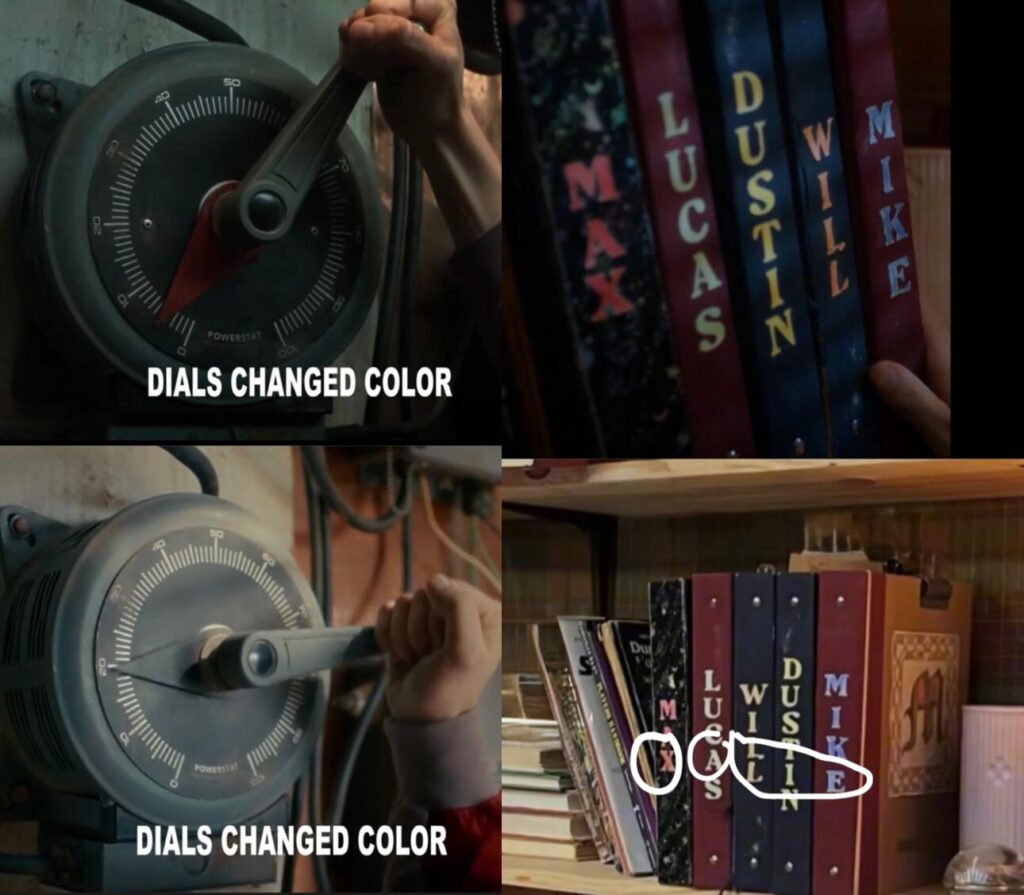
The finale felt unsettlingly peaceful and all the inconsistencies didn’t sit right with viewers. That’s how the Conformity gate theory was born. The theory suggests the finale isn’t real at all- that the characters are conforming to a distorted reality under Henry’s control. Fans interpreted colour changes and object placements as evidence of a fabricated world, while character choices reflected Henry’s limited understanding of them. The theory spread rapidly across social media, with many convinced a secret ninth episode was coming. It made perfect sense to fans desperate for answers: if the writing had fallen apart this badly, maybe it was intentional. But the theory proved false and no additional episodes were released. In the end, fans were left searching for deeper meaning in a finale that simply didn’t have it- a proof that audiences will construct their own narratives when the official one disappoints.
A Never Ending Story (& Budget)
Unlike a show like Stranger Things that heavily relies on aesthetics and design, other contemporary TV shows choose to focus more on storytelling. The production differences reveal everything. According to Cosmopolitan, Stranger Things season 5 spent between $50-60 million per episode. That’s twenty times more than what other Netflix shows have spent. To compare it with not so aesthetically-driven shows, series like The Good Doctor ran on roughly $5 million per episode. For Stranger Things the money didn’t improve the storytelling, it just stretched it out. Episode runtimes increased from 49.38 minutes in season 1 to 85.44 minutes in season 4, proving the Duffer Brothers prioritised spectacles over clear pacing. This reflected on their Rotten Tomatoes’ score which dropped from 97% in season 1 to 87% in season 5, while The Good Doctor maintained consistent viewership throughout its seven seasons. Half a billion dollars in production design can’t carry a show when the writing weakens. The audience will always choose substance over style and the ratings back that up.
Perhaps aware of these criticisms, Netflix has shifted towards a more cost-effective approach with Stranger Things ’85, an upcoming animated spin-off. It reflects a broader industry trend where animation is used to maintain franchise momentum to cut the budget significantly. Whether this strategy will recapture the original’s magic or simply feel like a cheaper alternative? Remains to be seen.
Stranger GPThings?
In the Stranger Things documentary, the Duffer Brothers are briefly shown working on a laptop with a ChatGPT screen visible. The moment quickly received a lot of attention online. Viewers circulated screenshots and speculated about the role of AI in the writing process. Some went further, suggesting that potential AI use contributed to the season’s plot holes and narrative inconsistencies. As of now there is no evidence that AI was used to write the show. Despite coverage from several major news outlets like Forbes and Cosmopolitan, the Duffer Brothers have not publicly responded to these allegations.
Whether intentional or not, the reaction to the final season of Stranger Things reveals a shift in how audiences consume television. Viewers no longer settle for surface-level aesthetics, but instead demand great narrative precision. The rise of fan theories, declining ratings, and even AI speculation suggest that audiences are reading between the lines more than ever. For the Duffer Brothers, the issue may not be that they lost their ability to tell compelling stories, but that their writing is now being held to a higher standard than before.
The moral of the story? In Hawkins, nothing stays Upside Down for long- eventually, the truth (and the plot holes) will always find their way to the surface.