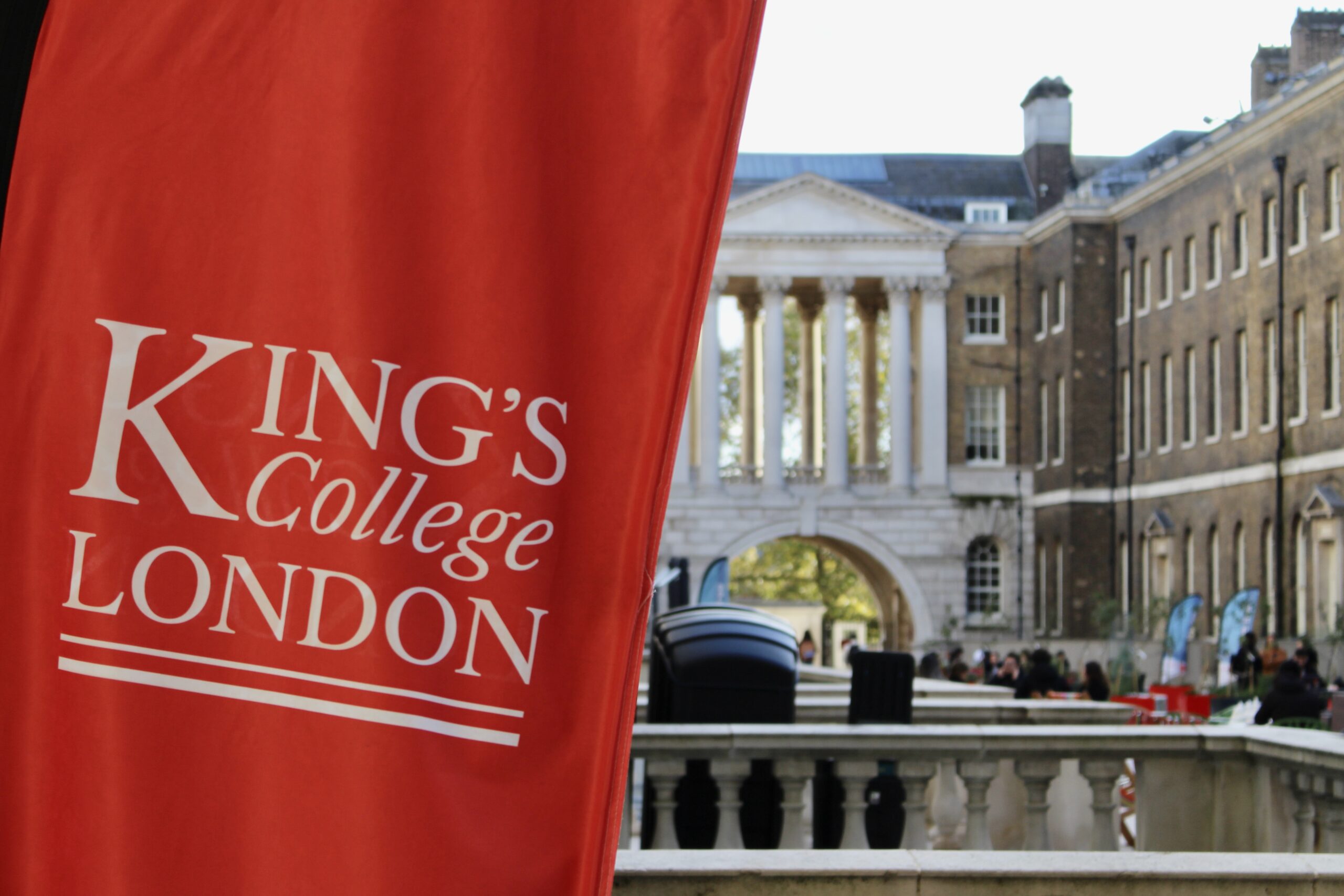
This October, an amendment to its foundational documents means that King’s College London (KCL) is now officially recognised as a university rather than a college.
With an amendment to the University of London (UoL) Act this October, King’s was finally awarded the ‘university title’. This means that after a six-year bureaucratic process, KCL is fully and formally independent. Previously, King’s was only recognised as a college within the UoL, alongside University College London (UCL), the London School of Economics (LSE) and 14 more institutions.
In practice, this will have little more than a symbolic impact. The name ‘King’s College London’ will remain unchanged, although ‘Principal and President’ Shitij Kapur will now be known as ‘Vice-Chancellor and President’ instead. This will also not have any impact on graduating students’ certificates, since KCL has had its own independent degree-awarding powers since 2006.
Other updates to the foundational documents made this year may be more impactful. Gendered language has been removed from the charter. The College Council, the organisation with “legal and financial responsibility to ensure the university operates effectively and sustainably in the long-term”, has also been changed. A second student seat was added to the panel, bringing the number of staff representatives down to seven. The Council still has only nine elected seats and twelve appointed ones, despite the recent KCL University and College Union (UCU) strike action having a majority-elected Council as one of its goals.
King’s College London was first established under the patronage of King George IV in 1829, after a Freemasons meeting hosted by the Duke of Wellington a year prior. In March of that year, Wellington engaged in a pistol duel with a the Earl of Winchilsea after he published a public letter which attacked Wellington’s motives for the College’s establishment. Both men emerged unharmed from the confrontation in Battersea Fields and Winchilsea’s criticism was later retracted.
King’s later became a founding member of the University of London, which was created by Royal Charter in 1836 as a secular institution to balance the Christian institutions of Oxford and Cambridge. In 1858, the UoL charter was formally enacted and it notably allowed students to study for their degree qualifications wherever in the world they were – a Victorian prelude to Zoom lectures. The change this year marks an end to almost 200 years of KCL’s college status.